

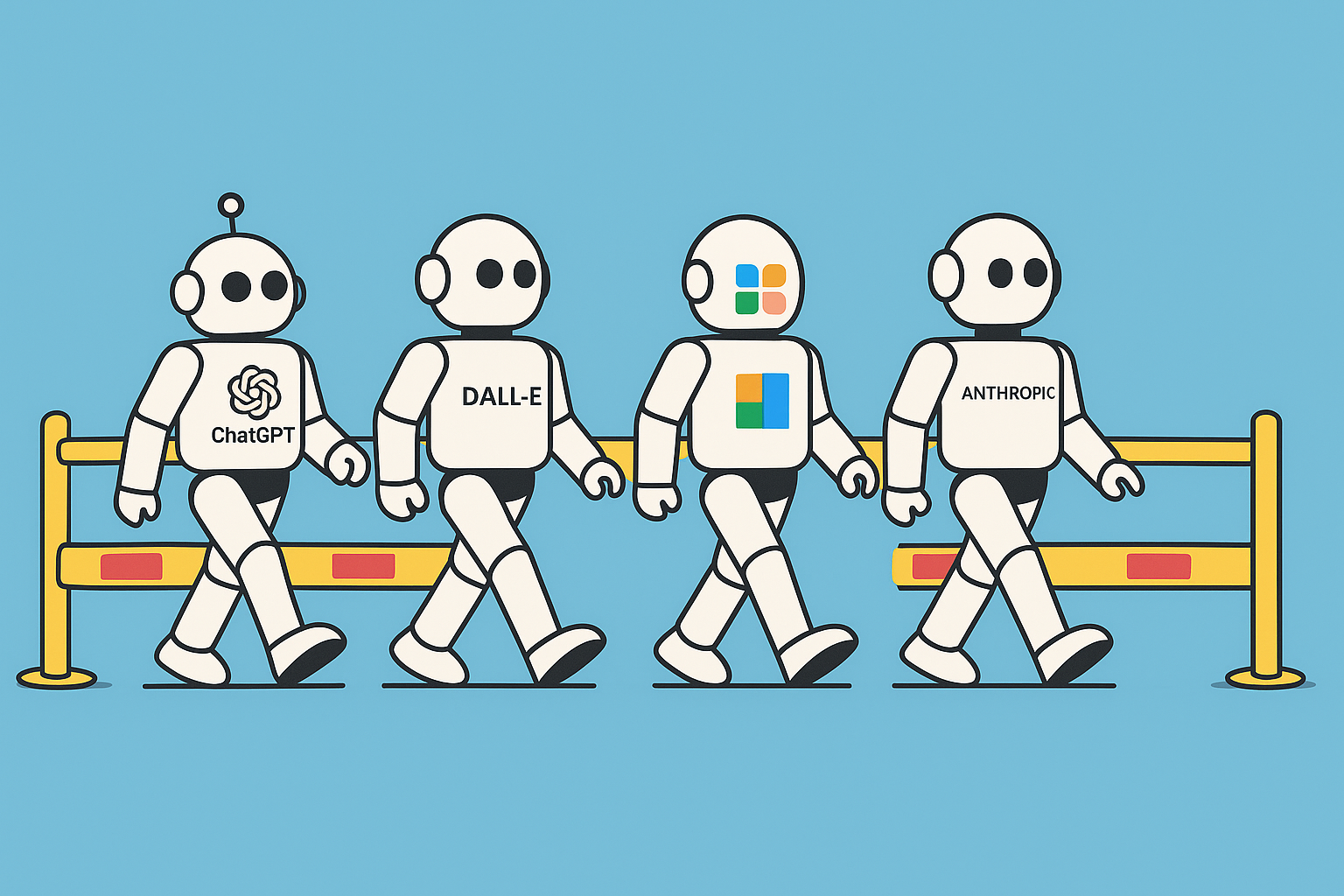
AI is finally showing up in everyday work- not as a sci-fi takeover, but as the thing people are quietly using behind the scenes to save time. The problem is, when employees experiment on their own, you get a mix of brilliance, chaos, and policies written after something goes wrong. The goal isn’t to ban AI or pretend it isn’t happening. It’s to create a culture where people want to use it, know how to use it, and can do it without putting the business (or your blood pressure) at risk. Here’s how to roll out AI in a way that boosts productivity without driving anyone -especially leadership – over the edge.
1. Start by Defining the ‘Approved AI Stack’
Employees will use whatever is easiest unless you make “approved” just as easy. Create a short, simple list of what’s allowed:
Examples:
- ChatGPT (logged in with company Google/Microsoft account)
- Microsoft Copilot (if you use Microsoft 365)
- Notion AI (if already using Notion)
- Canva AI (for simple graphics)
- Approved data-analysis tool (even if it’s just ChatGPT with CSV uploads)
- Meeting notetaking tools.
The rule should be:
‘If it’s not on the approved list, don’t use it for company work.’
This gives employees clarity instead of a vague ‘don’t be unsafe.’
2. Teach Them a “Standard Workflow”
Employees need not just permission but a recipe. Give them a basic workflow like:
- Draft with AI
- Edit and check for accuracy
- Apply your brand/tone
- Get a second human review if it goes to a customer
- Log or file the final version (more on tracking below)
This removes fear and gives people confidence.
3. Create Prompt Templates for Them
If you want control, you need consistency. Give them reusable templates for:
- Customer emails
- Marketing drafts
- Technical explanations
- Troubleshooting guides
- Project summaries
- Product documentation
- Social media drafts
This ensures better output and keeps them in compliance. Employees don’t need to be ‘AI experts’, they just need guardrails.
Building an AI-positive culture is not about perfection or locking everything down. It is about clear tools, simple rules, and giving people the confidence to use AI without guessing what is allowed. Start small, keep the guidelines human, and refine as you learn what works. When employees feel supported instead of monitored, adoption becomes natural and compliance becomes effortless. The companies that get this balance right will not just use AI, they will benefit from it in every part of the business. If you want help choosing tools or creating your own guardrails, we are here when you need us.
Next, we will talk about steps to take to enforce compliance, without turning into Big Brother!